Oonchiumpa: What Happens When Community Leads
There is a version of this story told through numbers. It has its place. But numbers are a translation, and something always gets lost in the translation. This is the fuller version.The cost of a cellAustralia spends somewhere north of $1.3 million e...
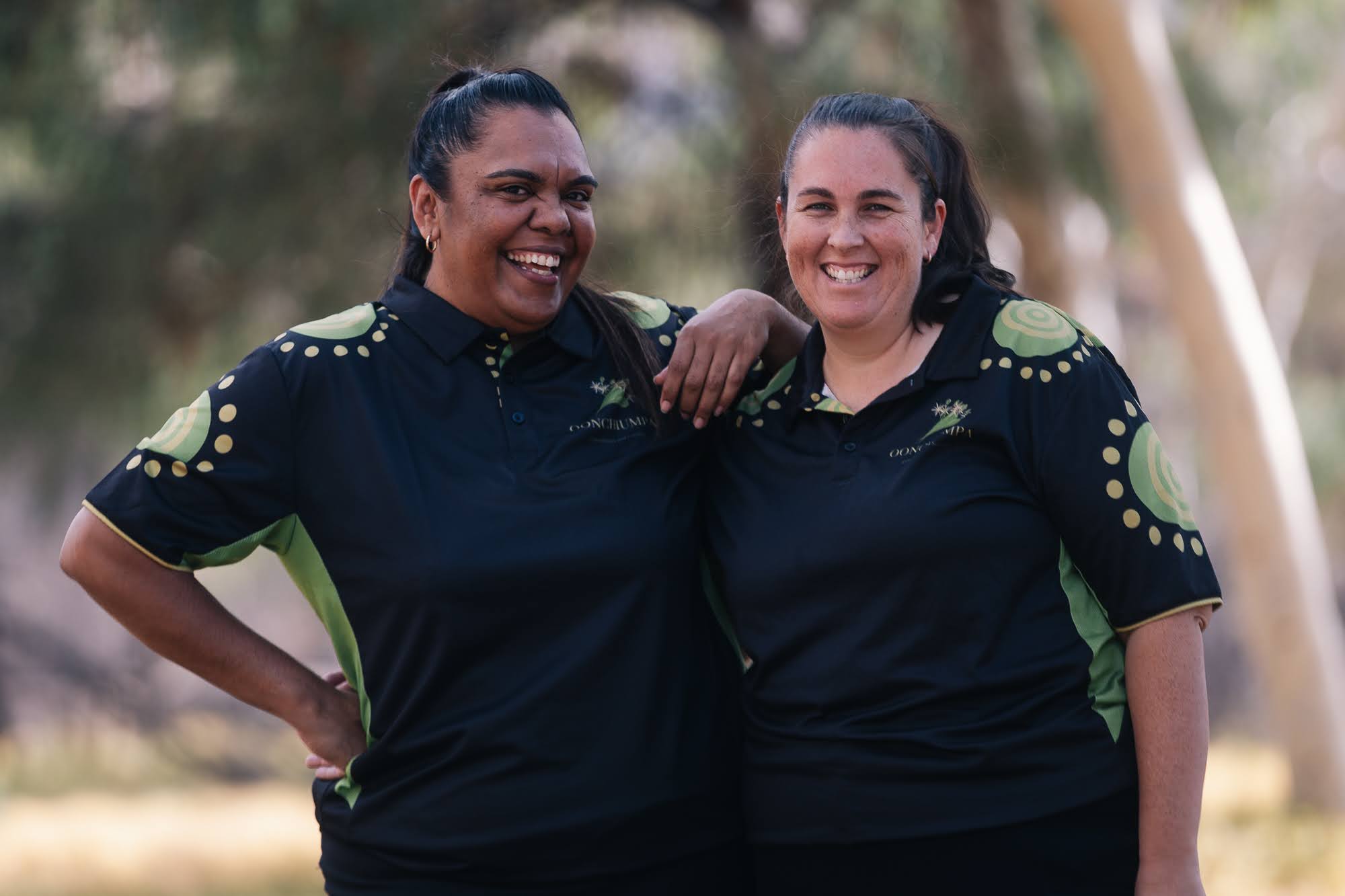
Oonchiumpa — Mparntwe / Alice Springs, Central Australia
There is a version of this story told through numbers. It has its place. But numbers are a translation, and something always gets lost in the translation. This is the fuller version.
The cost of a cell
Australia spends somewhere north of $1.3 million each year to hold one young person in detention. In the Northern Territory, it costs more. The reoffending rate sits above 80 per cent. Indigenous young people make up more than 60 per cent of those detained.
Think of it like a leaky bucket. The system keeps filling it. Nobody has stopped to ask why the bucket keeps emptying.
In Alice Springs, a small organisation decided to ask the question.
Who They Are
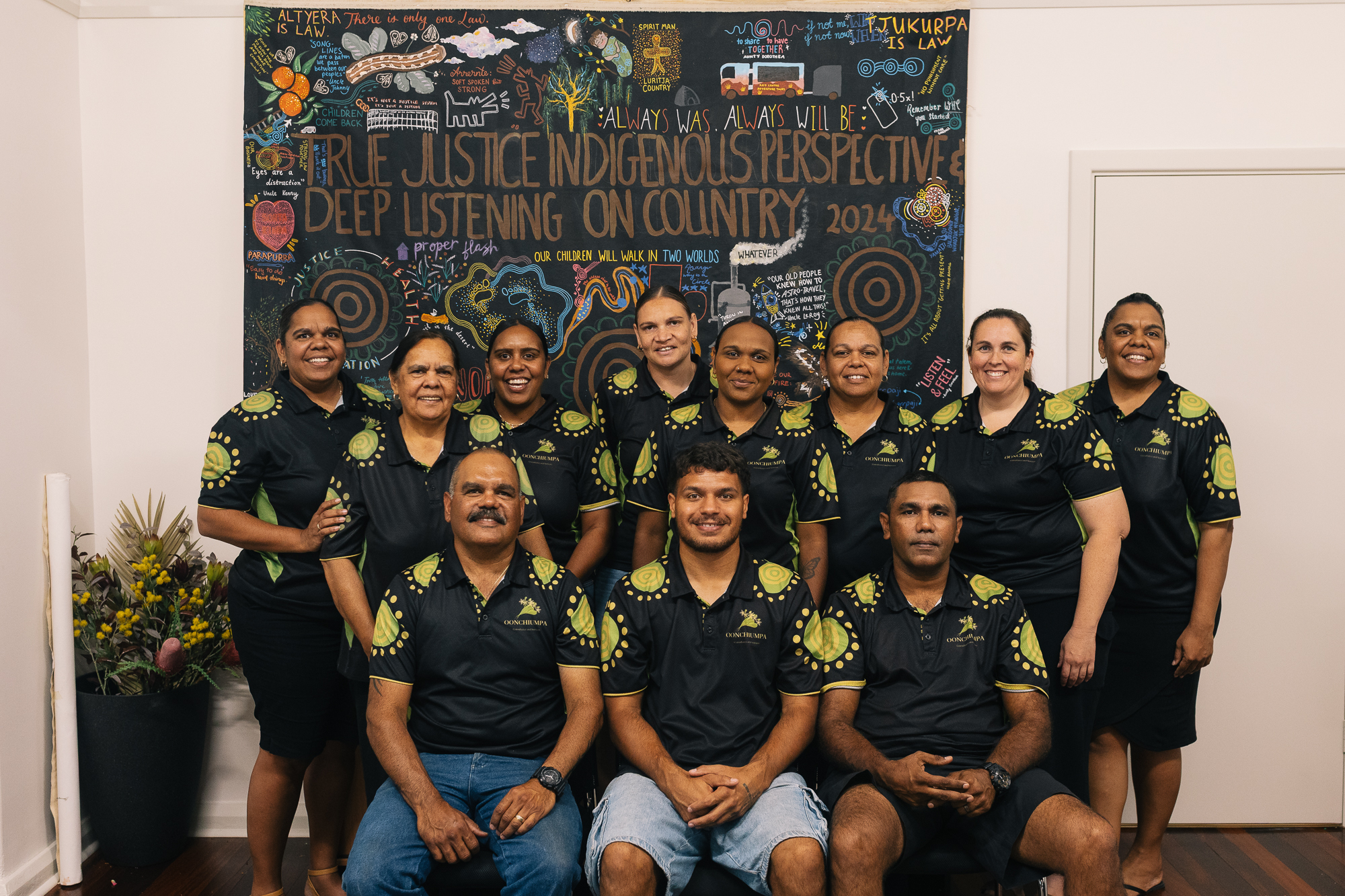
Oonchiumpa is 100 per cent Aboriginal community-controlled. It was founded by two women from Central Australia, and that origin matters more than it might first seem.
Kristy Bloomfield is a Central Arrernte, Eastern Arrernte and Alyawarra woman, a Traditional Owner of Mparntwe, Alice Springs. She grew up in the town that she now works to change. She carries, in her own words, the stories of sacred sites and burial grounds that only her family would know. Her grandfather, a stolen generation man taken from his parents to the Bungalow in Alice Springs, went to extraordinary lengths to keep his children from the same fate, marrying Kristy's grandmother in a church in Tennant Creek after police threatened to take the children away. The history she carries is not abstract. It is personal and it is living.
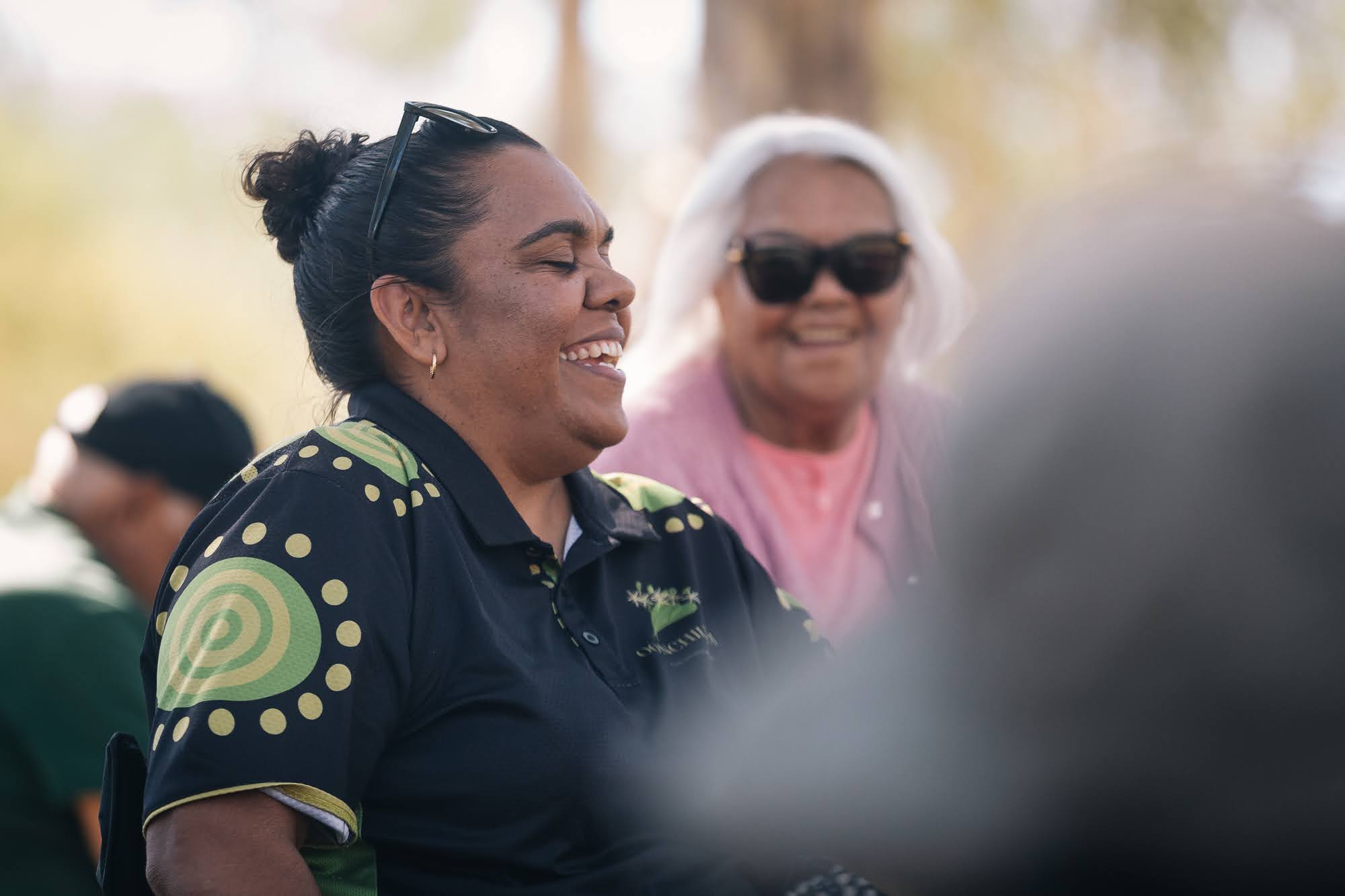
Tanya Turner is an Eastern Arrernte woman. She took a law degree at the University of Western Australia, worked as an associate at the Supreme Court of Victoria, ran a family mediation practice with a 95 per cent resolution rate, and then, one day on a tram in Melbourne, felt the pull home. She resigned two weeks later. That impulse, to bring expertise back where it belongs, is the architecture of Oonchiumpa.
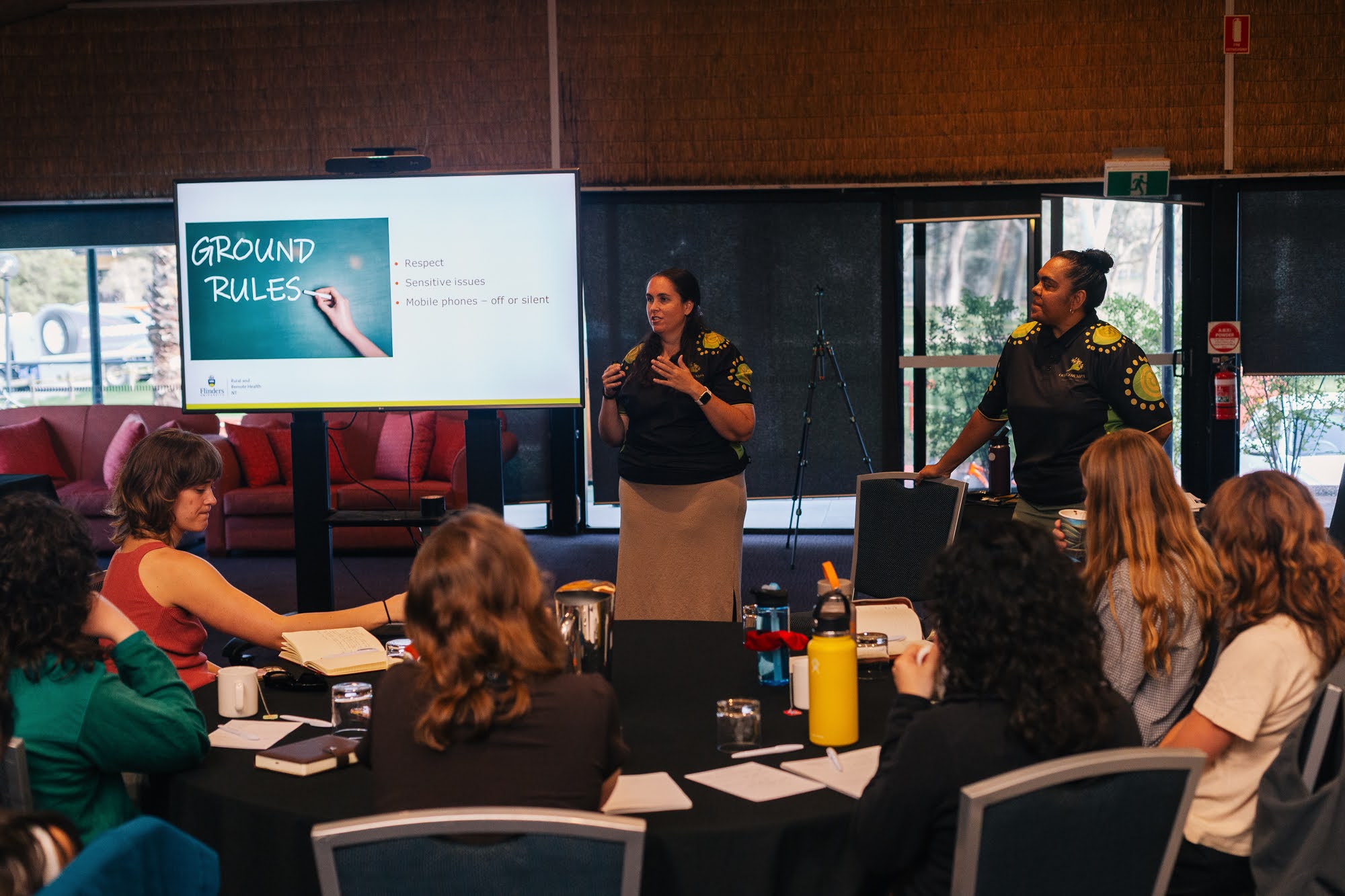
Together they run four programs that operate like concentric circles: direct relationship with young people at the centre, cultural authority extending outward, the broader system at the edges.
Why This Works When Other Things Don't
The clearest way to describe Oonchiumpa's model is to describe what it is not.
Most youth interventions are designed at a distance and delivered locally. They treat young people as recipients. They measure outputs. When the relationship gets hard, they document it and move on.
Oonchiumpa operates from a different premise: that the young people they work with already know their world, that they have capability the system rarely recognises, and that the most effective thing an adult can do is stay present when the pressure is highest.
Fred Campbell is a youth case worker who married into the Bloomfield family. He describes his role in simple terms. He does case planning. He runs care team meetings. He gives young people rides to school. He shows up.
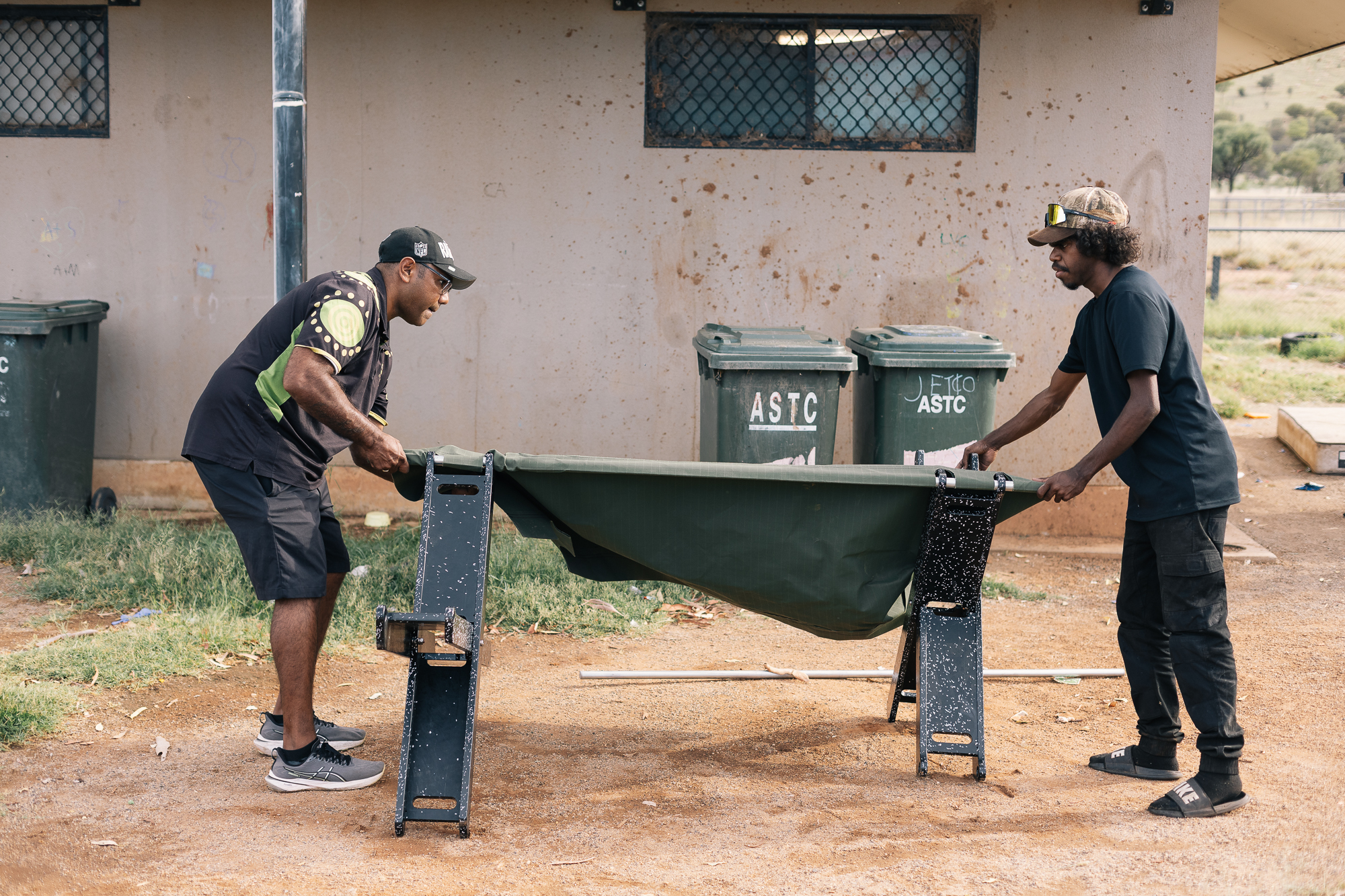
He told us about Xavier, one of Oonchiumpa's first clients, who has a disability. When Xavier's relationship with other service providers became difficult, those services created distance. Fred uses that word, "distanced," in a way that says everything about how those institutions saw their role. Oonchiumpa stayed.
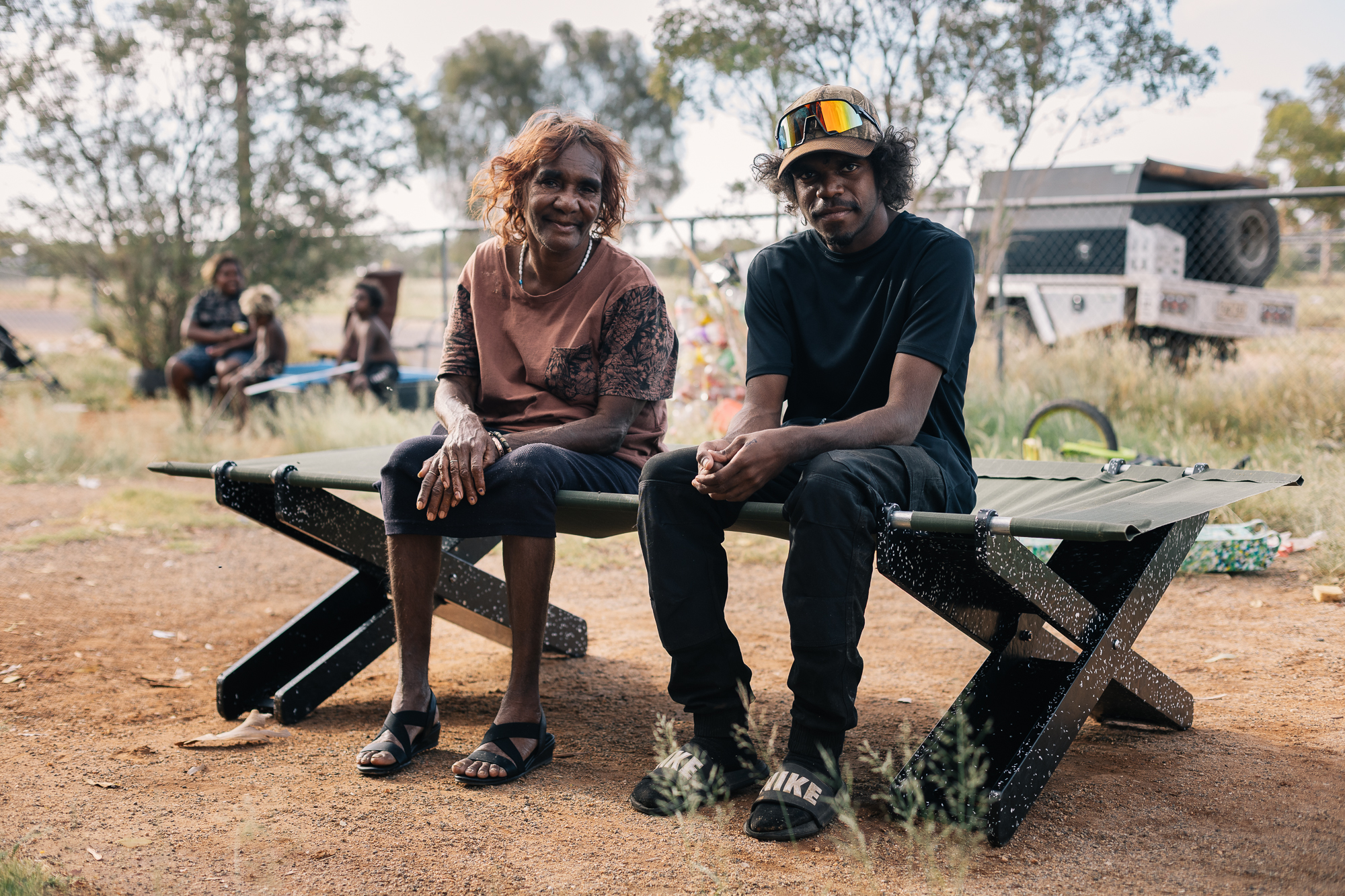
Xavier was recently released from detention. He has not been back in trouble. He built a Stretch Bed from recycled plastic, the kind of portable, durable bed that Fred notes has immediate use in community: for ceremony business, for bush trips, for sleeping off the ground away from the dogs that carry scabies, for families practising sorry business who need to move away from a place after a death.
"He just was so proud showing them that he can build it," Fred said. "He's quite capable of building that on his own and sharing that onto other kids."
The reports on Xavier's "ability to understand" had said otherwise. Xavier had a different version of his own capability. Oonchiumpa bet on his version.
This is not a complicated idea. It is, however, a rare one.
The Young People
We spent time with young people connected to Oonchiumpa. Not to extract quotes for a report, but to listen to what they actually said.
J is fourteen. He lives with his grandfather at Upper Camp. He likes basketball. He has been inside the Alice Springs Detention Centre.
Asked what detention is like, he said: "At six o'clock you get locked down. You wait till tomorrow."
Asked what would stop him getting into trouble: "Looking after my family."
That is not the answer the justice system is designed around. It is probably the most important answer in this story.
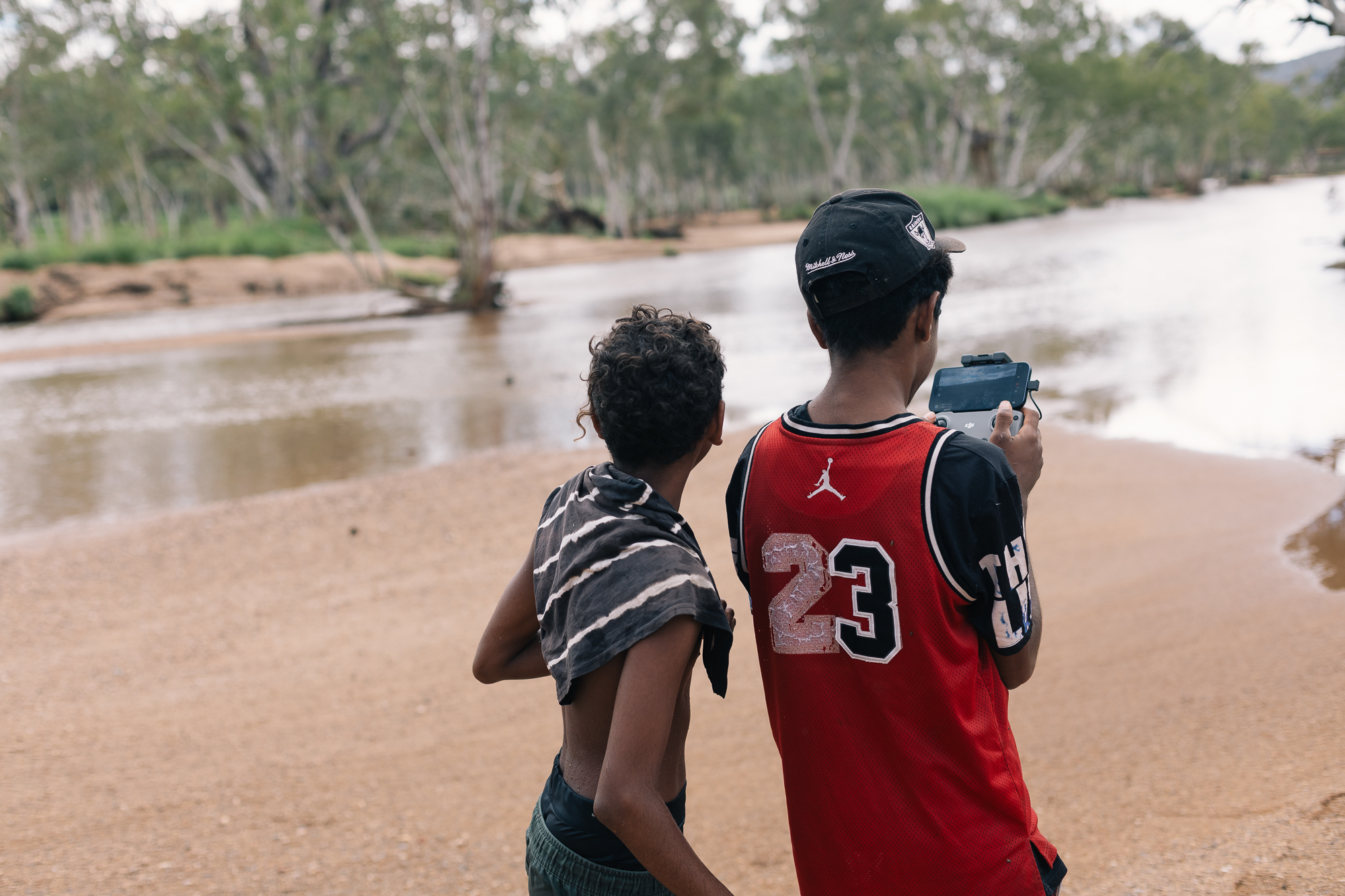
N is fourteen. He lives at a station in Double Camp. He goes to school. He wants to play AFL. He knows, with the clarity of someone who has worked it out himself, that going to school every day is the path to that. What he lacked was not motivation. He lacked someone to walk the path with him. Oonchiumpa picks him up, takes him to school, takes him to the cinema. The thing on offer is consistency. The consistency is the program.
L is sixteen. She lives with her auntie and manages a complex home situation with a kind of steadiness that would be remarkable in someone twice her age. She was sent to Darwin Youth Detention, 1,500 kilometres from Alice Springs. She was allowed twelve-minute phone calls, with two-hour waits between them.
"I don't like going to Darwin because I have no family there."
When asked why young people get into trouble, she answered in one word: "Oppression."
These three young people, across different conversations, all named the same thing as the most painful part of detention. Not the loss of freedom. The loss of family. None of them described their home situations as simple or easy. None of them said they wanted to leave. They said that is home, and home should be safer, not replaced.
What the Numbers Point To
When NT Police ran Operation Luna, a targeted response to twenty-one high-risk young people in Alice Springs, Oonchiumpa worked alongside them. By December, twenty of those twenty-one young people were off the list.
Across Oonchiumpa's work: 95 per cent diversion from the justice system. 72 per cent of young people who had disengaged from school have returned to education. The organisation runs at 97.6 per cent less cost than detaining one child for one year.
These are not offered as proof that the model is finished or scalable on its own terms. They are offered as evidence that the underlying theory, that relationship, cultural authority and practical support produce better outcomes than detention, is not wishful thinking.
What Comes Next
In June 2026, eight Oonchiumpa staff will travel to South East Queensland to visit other community organisations, share approaches and build relationships. The model is designed to travel.
The partnership with Professor Helen Milroy and the Australian National University continues to expand, training law students, future magistrates and policymakers in restorative justice approaches grounded in First Nations knowledge. The goal, as Tanya Turner puts it, is not just to serve Alice Springs better. It is to demonstrate what is possible when Aboriginal people with cultural authority are given the resources to lead.
Atnarpa Homestead, on country east of Alice Springs belonging to Max Bloomfield's family, provides the ground for on-country cultural camps. Young people go out to country, work with Elders and Traditional Owners, and return to something that is harder to name than a program outcome but that Fred, and Kristy, and Tanya, all point to as foundational: knowing who you are, knowing where you come from, knowing who your family is.
The Question Underneath All Of This
Tanya Turner said something in a conversation that has stayed with us.
"Our young people are just collateral in a bigger issue. The issue doesn't sit with them. It sits on a much broader level and with adults, not with children."
The system was built to manage consequences. Oonchiumpa is trying to address causes. That is a different kind of work, and it requires a different kind of authority than the system currently offers community-led organisations.
Xavier built a bed. J wants to look after his grandfather. N wants to play football. L named the root cause in one word.
The alternative to detention is not theoretical. It is already happening. In Alice Springs, it is called Oonchiumpa.
Young people's stories are drawn from Empathy Ledger transcripts with consent protocols in place. Names used with permission and initials when under 18. Detention cost data sourced from the Productivity Commission Report on Government Services (ROGS), Table 17A.20.