723 youth-justice records. 609 evidence-rated. 93x average cost gap.

Australia locks up children.
There are better answers.

This is a public guide for people who have seen the harm and want to understand what can change. Start with the human story, then find the evidence, services, alternatives, costs, and people already working for a different future.

The numbers are catalogue records, not endorsements. Each record should be read with its evidence level, source trail, location, and review status so weak signals stay visible.

Finding alternatives

If detention is the wrong answer, what support can actually hold a young person?

The Australian Living Map of Alternatives helps people look for local services, court support, housing, mentoring, school pathways, cultural support, and community-led programs that can change the path before custody.

First-contact triage

A no-wrong-door intake that asks what the young person needs in the next 72 hours: safety, legal help, bail, housing, family, school, culture, health, or transport.

Bail and remand support

Court support, bail address options, family liaison, reminders, transport, mentor check-ins, and practical plans that make release safer than custody.

Stable place to land

Housing, respite, supported accommodation, family mediation, and safe local places so "no address" does not become a detention pathway.

Learning and work

Flexible school, TAFE, training, paid work, social enterprise, and creative practice that give a young person a next week worth turning up for.

Healing and culture

Elders, family, on-Country work, AOD support, mental health, peer leadership, and trauma-aware practice held by trusted local people.

Proof and resourcing

Plain evidence, costs, referral details, outcomes, funding needs, and source links so local work can be found and backed.

One roof

The long-term goal is a real place where people can sit together and solve practical problems.

A local JusticeHub should bring support navigation, alternatives, legal help, story consent, funders, and practice learning into one room, so families and workers are not left to navigate everything alone.

Welcome desk

A calm front door that routes people to support, not a maze of forms.

Local alternatives bench

Screens, maps, and cards showing local alternatives, referral paths, evidence, and gaps.

Law and advocacy table

Cases, campaign memory, briefs, complaints, and source packs that help people act carefully.

Story consent studio

Empathy Ledger capture, review, withdrawal, attribution, and cultural safety before anything public.

Funding room

A place to turn community work into clear asks, partner packs, and practical backing.

Practice lab

Practitioners, young people, families, and system people improving the model together.

Centre of Excellence for Youth Justice

If we ask people to believe something, we show where it came from.

JusticeHub is careful with claims. We name the source, show the organisation where possible, and mark what is still being checked.

See the evidence trail

60

Triangulated claims

Checked against 3+ sources

28

Corroborated

Checked against 2 sources

149

Tier 1 frontline YJ orgs

Confirmed in civic register

1,603

ACCO certified

Via ORIC public register

Detention

$1.3M

per young person per year

$3,634.9/day national average. NT: $3,452.25/day. ROGS 2024-25.

Community Models

$14K

per young person (average)

Across 1,193 models with cost data.

93x

cheaper. Better outcomes. Proven.

Try the calculator
First issue guideResearch, not legal advice

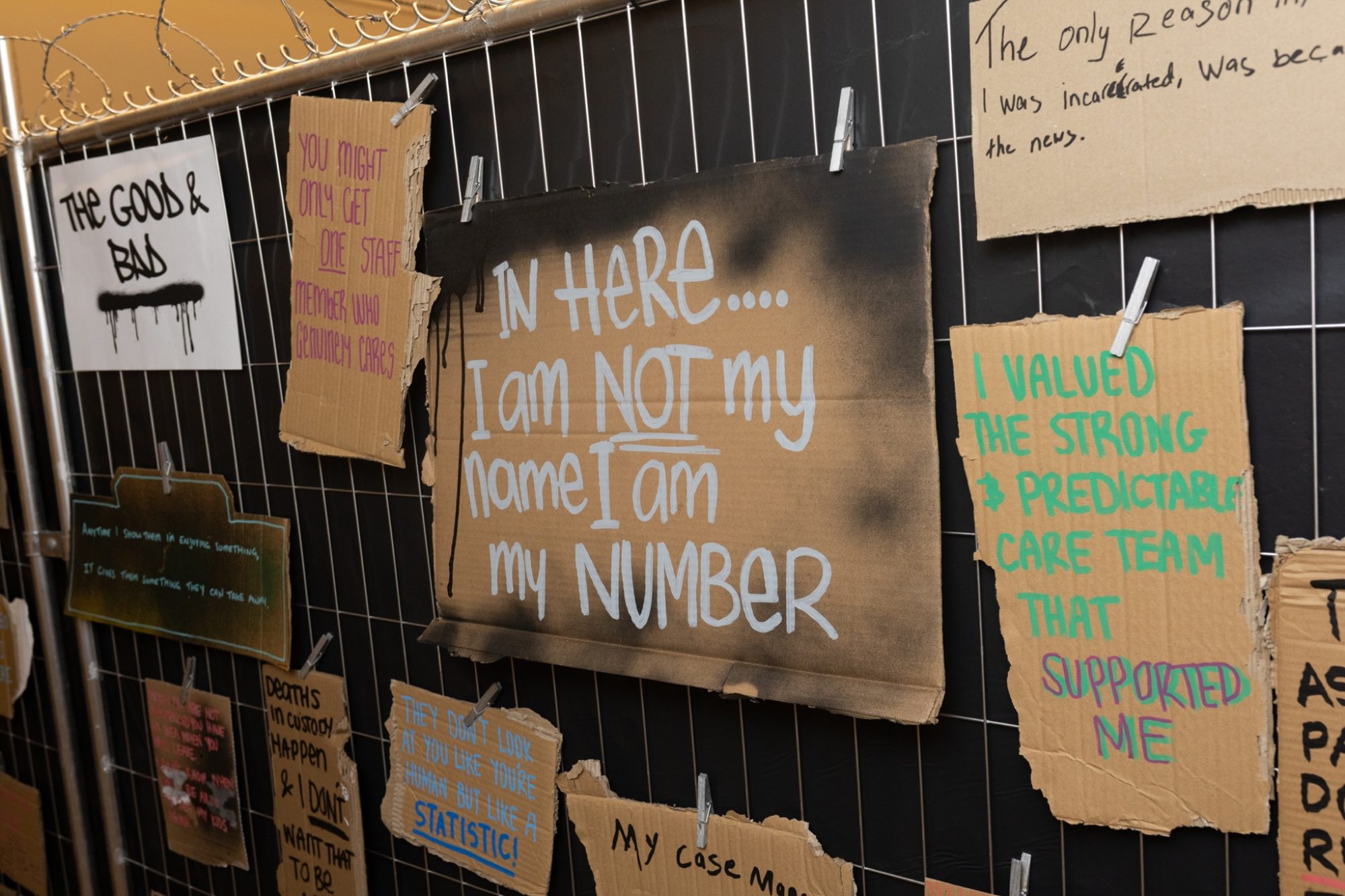
If CONTAINED leaves people asking "what now?", start with youth remand.

This guide explains why young people are held before sentence, what it costs, what alternatives exist, who is organising, and what a visitor, advocate, worker, funder, or decision-maker can do next.

Law

cases, campaigns, and rights in plain language

Support

detention sites, local alternatives, and funding

People

stories only when consent makes them safe to share

Three ways to go deeper.

Once you know why you are here, choose a practical next step: find help, add what you know, or use the proof.

The public record

Numbers are not enough on their own. They help people see where money goes, what support exists, and which claims still need care.

Oonchiumpa: What Happens When Community Leads

Oonchiumpa: What Happens When Community Leads

Benjamin Knight

There is a version of this story told through numbers. It has its place. But numbers are a translation, and something always gets lost in the translation. This is the fuller version.The cost of a cellAustralia spends somewhere north of $1.3 million e...

The Cure Already Exists

The Cure Already Exists

Benjamin Knight

We spend $1.3 million a year per child to lock them in a room with no window. The recidivism rate is 85 percent. But in communities across Australia, the alternatives are already working. This is what they look like.

Eating the Paperwork: How AI Creates a Renaissance of Community Engagement

Benjamin Knight

Every small organisation in Australia has been drowning in compliance, reporting, and grant acquittals. What AI now makes possible is the compression of that administrative layer, freeing 50% of capacity back to the relational work that actually changes lives. JusticeHub is the living proof point.

Spain Diagrama Trip Reflection

Spain Diagrama Trip Reflection

Benjamin Knight

A personal reflection on visiting Diagrama youth detention centres in Spain — contrasting their compassionate, rehabilitation-focused approach with Australia's punitive system.

Building Revolution in Shipping Containers: The Story of CONTAINED

Building Revolution in Shipping Containers: The Story of CONTAINED

Benjamin Knight

CONTAINED is not another awareness campaign with sad statistics on posters. It's an immersive experience built from shipping containers - transformation chambers that make the invisible visible and the abstract tangible.

Walking Toward Justice: A Personal Journey

Walking Toward Justice: A Personal Journey

Benjamin Knight

I didn’t set out to build a platform like JusticeHub. I set out to listen.

Stay with the work

The alternative is already here. The next step is helping more people find it, trust it, fund it, and grow it.

The work is happening in communities, services, courts, campaigns, and families. JusticeHub brings those threads together so people can act with care instead of guessing.