The Cure Already Exists
There is a room I want you to sit in. It is small. The light is fluorescent. We spend $1.3 million a year per child to put them there. And 85 percent go straight back in. The cure already exists — in communities already doing the work.
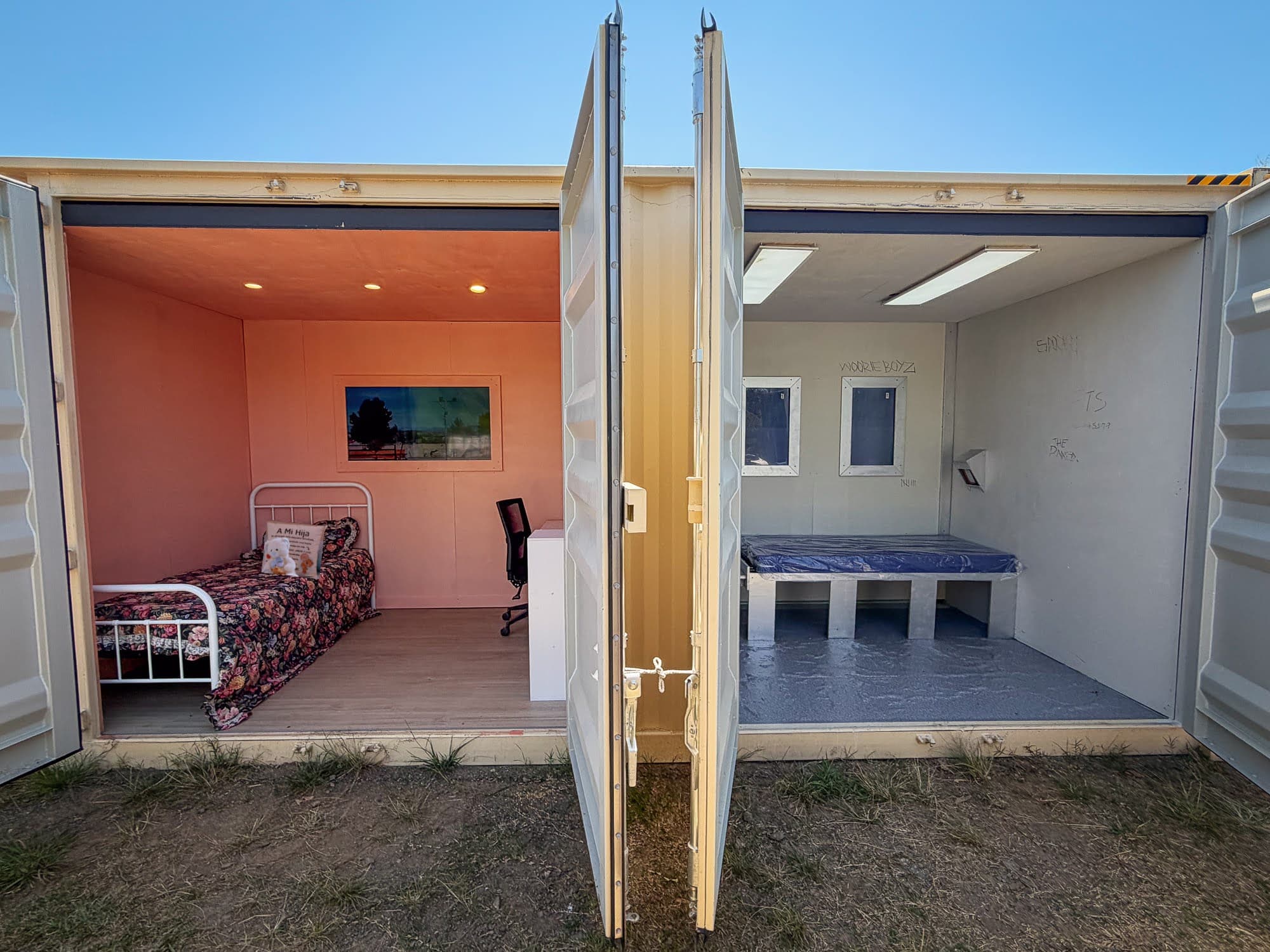
There is a room I want you to sit in.
It is small. The light is fluorescent. The walls close in the way they do in places designed to hold people, not help them. There is no window. You can hear someone crying through the wall, but you cannot reach them.
This is what a child sees when Australia decides they need to be taught a lesson.
We spend $1.3 million a year per child to put them in that room. In Victoria, it is $2.6 million. Across the country, it adds up to more than a billion dollars a year. And 85 percent of the kids who come out go straight back in.
That is the system. Expensive. Broken. And it falls, with devastating precision, on First Nations children who are 21 times more likely to end up inside than their non-Indigenous classmates.
Everyone who works in this space knows it. Every inquiry has said it. Every report confirms it. The question is not whether the approach is broken. The question is what you do about it. Right now. Today. With your hands and your time and your attention.
The Container
We are launching something called CONTAINED. A shipping container. One container, three rooms, thirty minutes.
The first room shows you what the current system does to a child. Not in theory. Physically. You sit in it.
A young man named Isaiah helped us build the first version of that room. He has been through the system. He knows what the steel benches feel like, because timber could become a weapon. He knows what the mesh windows look like, because glass could become a weapon. He knows the fluorescent light, the bolted furniture, the institutional logic that strips everything portable because hope gets dangerous when it is portable.
Isaiah sat with us while people walked through. He watched their faces. He said: "I was just watching your face and you're like, 'What the f---?'"
That recognition is the point. Not sympathy. Recognition. The first room does not explain detention. It makes you sit in it.
At every tour stop, young people from the local community will design this room. They are the experts. They know what it feels like. They decide what the public needs to see. Isaiah now works at Interlace Advisory. He went from surviving the system to redesigning it. That is not an inspirational footnote.
That is the whole argument.
The second room shows you what works instead.
Last year I visited the Diagrama Foundation in Spain. They run youth detention centres. Except they do not call them that, and once you are inside you understand why. Curtains on the windows, not metal grates. Wooden floors. Natural light. Gardens tended by the young people themselves. The staff are called "social educators", not guards.
Jesus Teruel, the "Territorial Director", told me: "We aren't jailers. We're not just enforcing a sentence to pass the months until they leave. We're here to work with them, to transmit values, to show them there's a different way."
Their recidivism rate is 13.6 percent. Australia's is above 80. Their cost per young person is around $31,000 a year. Ours is $1.3 million. For every euro they invest, the University of Valencia found a return of 5.64 euros in avoided social cost.
Then you step into the third room. And the third room changes at every stop. Because the third room belongs to the community hosting the container. It is filled by the local organisations already doing the work. Not the ones you read about in government reports. The ones running on volunteer hours and grant cycles and midnight phone calls.
The Proof
Oonchiumpa, in Alice Springs, is 100 percent Aboriginal-led. Founded by Kristy Bloomfield and Tanya Turner. 95 percent diversion success. 97.6 percent cheaper than detention. When NT Police ran Operation Luna, a targeted list of 21 high-risk young people, Oonchiumpa worked with them. By December, only one remained on that list.
Kristy says: "These aren't 'bad kids', they're children without basics many Australians take for granted. The system responds with detention that costs millions and changes nothing. We respond with cultural connection, practical support, and the authority that comes from being their Elders, their Traditional Owners, their family."
On Palm Island, PICC (Palm Island Community Company) has 197 staff delivering services across North Queensland with a 78 percent diversion rate. Culture is protection. When young people know who they are, where they come from, and who their family is, they make different choices.
In Mount Druitt, Western Sydney, Mounty Yarns is doing something different again. Youth-led storytelling. Young people writing and publishing their own stories, running their own media. Thirty percent of participants are now pursuing media careers.
Three communities. Three approaches. Alice Springs, Palm Island, Mount Druitt. Aboriginal-led cultural authority, community-driven family strength, youth-led storytelling. Same truth underneath all of it: when families and communities lead, young people respond.
The Numbers Behind the Anger
Australia spends more than a billion dollars a year locking up children. The Productivity Commission's latest Report on Government Services puts the average cost at $1.3 million per child per year. More than $3,600 a day.
For that money, we get an 85 percent return rate. We get 860 young people in detention. We get First Nations children comprising over 60 percent of the detained population despite being a fraction of the youth population.
JusticeHub tracks this. We have mapped more than 800 verified interventions, organisations, and programs across every state and territory. We track where public money goes — more than $1 billion in justice spending, line by line. We show the gap between what governments spend on detention and what they invest in what actually works.
Now I Want to Talk About Beds
Goods. is led by my co-founder Nicholas Marchesi at A Curious Tractor. We work with remote Indigenous communities to design and manufacture essential goods, starting with a bed made from recycled plastic, galvanised steel, and heavy-duty Australian canvas. It flat-packs. It washes. It assembles in five minutes with no tools. Each one diverts 20 kilograms of plastic from landfill.
We have delivered more than 400 beds across eight communities. We built a containerised production facility. Two shipping containers, one that shreds and collects plastic, one that presses sheets and cuts parts.
Why does this belong in a youth justice article? Because the pipeline is direct. One in three children in remote communities has scabies at any given time. Scabies leads to Rheumatic Heart Disease. Kids who are sick do not go to school. Kids who do not go to school end up in the system. The connection between a bed and a courtroom is not theoretical.
What You Can Do Today
Experience the container. CONTAINED launches April 20 and will tour nationally. Bring your colleagues, your family, your local MP. Thirty minutes changes the way you see this issue. justicehub.org.au/contained
Nominate a decision-maker. We are building a public list of politicians, justice officials, media leaders, and community figures who should experience CONTAINED. justicehub.org.au/contained
Back the tour. It costs money to move a shipping container across Australia. justicehub.org.au/back-this
Connect with the organisations doing the work. If you run a program, add it to JusticeHub. If you fund programs, use JusticeHub to find what works. justicehub.org.au
Support Goods on Country. Every bed, every washing machine, every training placement is a step toward community-owned enterprise. goodsoncountry.com
The Point
The cure already exists. It lives in communities like Alice Springs and Palm Island and Mount Druitt. It lives in Elders like Dianne Stokes naming a washing machine in language. It lives in Kristy Bloomfield getting a phone call at midnight because a kid needs somewhere to go, and going. It lives in young people on Palm Island learning to build beds from recycled plastic.
It is not waiting for permission. It is happening. The only question is whether the rest of us will catch up.
Benjamin Knight is the co-founder of A Curious Tractor, the organisation behind JusticeHub and Goods on Country. He builds open infrastructure for community-led justice reform and essential goods manufacturing in remote Australia.
Experience Contained
A 30-minute, three-room installation that closes the gap between evidence and public understanding.
Learn More